Your brakes are the most important safety system in your car.
If they ever feel soft, loose, or spongy, it means something is wrong — and ignoring the issue can put you and your passengers in serious danger.
Soft brakes don’t just happen. They are a sign that your braking system is failing somewhere.
In this guide, Bunch Base Motors explains:
- What causes soft or spongy brakes
- What to do immediately
- How mechanics fix the problem
- When it’s too dangerous to drive
This guide can literally save your life.
🔎 What Does “Soft or Spongy Brakes” Mean?
When brakes feel soft, you will notice:
- The pedal sinks too easily
- The car takes longer to stop
- You need to press harder
- The pedal feels bouncy or springy
- Stopping power is weak
These are warning signs of brake failure.
⚠️ Is It Safe to Drive With Soft Brakes?
No. It is extremely dangerous.
Soft brakes mean the system is not building enough pressure to stop the car properly.
If you continue driving, your brakes may fail completely, especially during emergency braking.
🧰 MAIN CAUSES OF SOFT OR SPONGY BRAKES
1. Low Brake Fluid
This is the most common cause.
Brake fluid powers the hydraulic system that stops your car.
Low fluid may be caused by:
- A leak
- Old, evaporated fluid
- Worn brake pads
What to do:
✔ Check brake fluid level immediately
✔ Top up with the correct DOT fluid
❌ Do NOT continue driving if fluid keeps dropping
2. Air in the Brake Lines
Brakes must operate on pure fluid — not air.
Air bubbles reduce pressure, making the pedal feel spongy.
What to do:
✔ Bleed the brakes (done by a mechanic)
✔ Avoid hard braking until fixed
3. Worn Brake Pads
If pads are too thin, braking power reduces dramatically.
What to do:
✔ Inspect pads
✔ Replace if they look thin (less than 3mm)
✔ Avoid driving in heavy traffic until repaired
4. Leaking Brake Line
A leak in the brake hose or pipe causes fluid loss and reduced pressure.
Signs:
- Fluid under the car
- Brake warning light
- Pedal goes to the floor
What to do:
❌ Do NOT drive
✔ Tow the car immediately
✔ Repair or replace damaged lines
5. Faulty Master Cylinder
This is the heart of your braking system.
If it fails, pressure cannot build.
Signs:
- Brake pedal sinks slowly
- Must pump brakes to stop
What to do:
✔ Replace the master cylinder
✔ Check for internal leaks
6. Overheated Brakes
Driving downhill, towing heavy loads, or constant braking can overheat the system.
Meaning:
Brake fluid boils → forms air → brakes feel weak.
What to do:
✔ Stop the car and rest the brakes
✔ Let the system cool
✔ Avoid long braking — use engine braking
🚀 WHAT TO DO IMMEDIATELY IF YOUR BRAKES FEEL SOFT
1. Pump the Brake Pedal
Pumping can temporarily build pressure.
If it works → You have air in the system
If it doesn’t → Fluid leak or major failure
2. Pull Over Safely
Move slowly and stop on the side of the road.
3. Check Brake Fluid
If low, add fluid — but understand this is a temporary fix, not a solution.
4. Call a Mechanic or Tow Service
Driving with soft brakes is never safe.
🛠️ HOW MECHANICS FIX SOFT OR SPONGY BRAKES
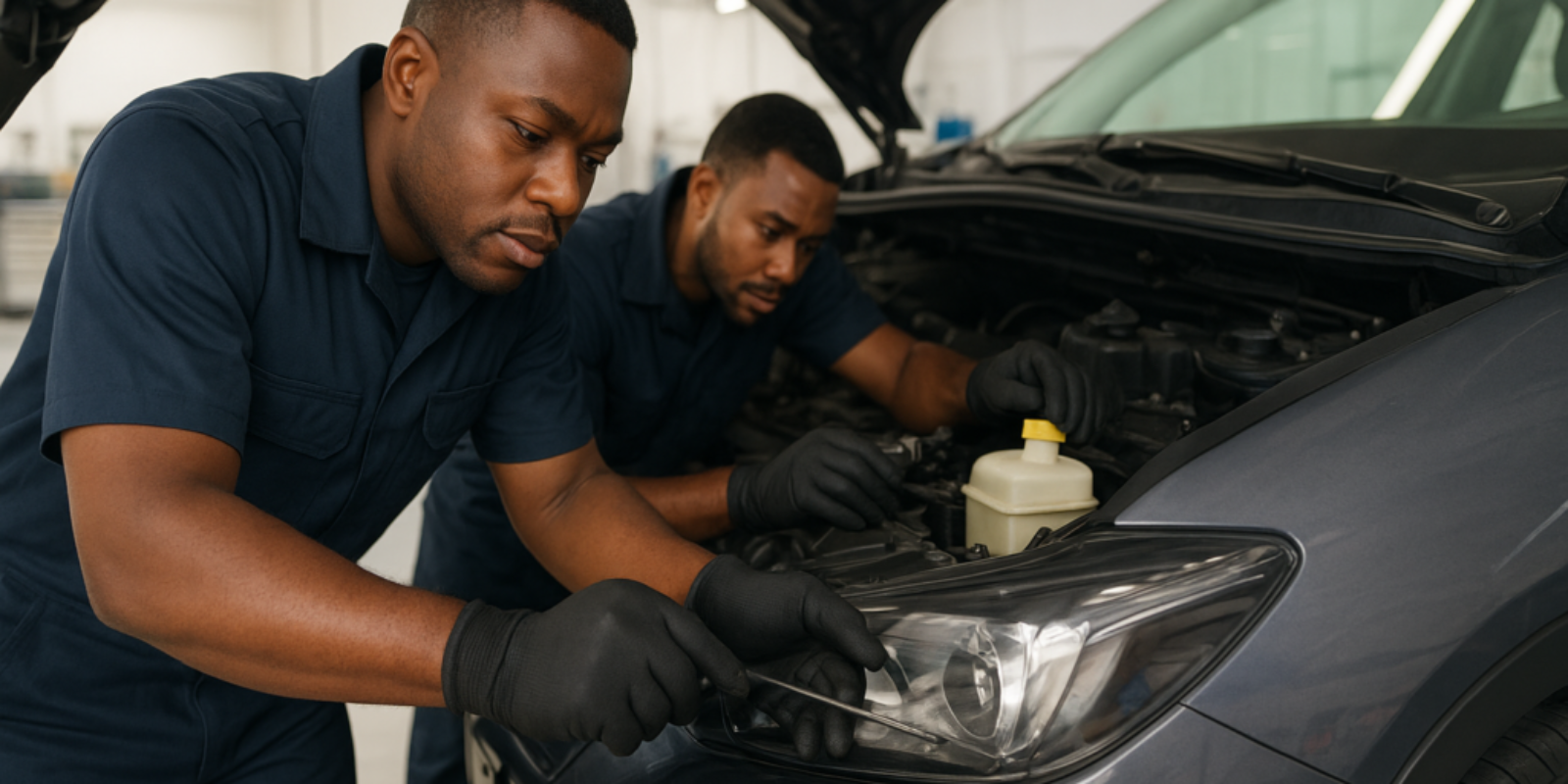
A professional will:
- Inspect brake fluid level
- Check for leaks
- Bleed the brake system
- Inspect brake pads and rotors
- Test master cylinder pressure
- Replace worn or damaged parts
Soft brakes must be repaired immediately. Your life depends on it.
📌 When You Should NOT Drive At All
You must STOP driving immediately if you notice:
- Brake warning light
- Fluid leaking under the car
- Pedal goes to the floor
- You must pump brakes to stop
- Burning smell from wheels
Tow the car. Do not attempt to drive.
💡 Prevention Tips
To avoid soft brakes in the future:
- Check brake fluid monthly
- Change fluid every 2 years
- Replace pads early
- Avoid aggressive braking
- Service your braking system every 6 months
Your brakes are the difference between life and death — maintain them well.