Whether you’re a new driver or an experienced car owner, vehicle problems can hit unexpectedly—and often at the worst possible time. Knowing the most common issues can save you money, prevent breakdowns, and even protect your life on the road.
Here are the top 20 car problems every driver must know, how to spot them, and what to do next.
1. Dead or Weak Battery
A weak battery makes your car struggle to start, especially in cold weather.
Common signs: slow engine crank, dim lights.
Fix: test and replace every 2–3 years.
2. Engine Overheating
A major threat that can destroy your engine if ignored.
Causes: low coolant, faulty thermostat, broken water pump.
Fix: stop immediately, let the engine cool, check coolant levels.
3. Worn Brake Pads
Brake pads wear down over time and reduce stopping power.
Signs: squeaking, grinding noise, longer braking distance.
Fix: replace immediately to avoid rotor damage.
4. Soft or Spongy Brakes
Soft brakes mean air or a leak in the brake lines.
Fix: do not drive—tow the vehicle and get it inspected.
5. Flat or Worn-Out Tires
Underinflated or bald tires cause skidding, blowouts, and bad fuel economy.
Fix: maintain proper PSI and replace tires every 50,000–70,000 km.
6. Faulty Alternator
If your car suddenly shuts off or lights flicker, the alternator may be failing.
Fix: test charging system and replace alternator if needed.
7. Transmission Problems
Transmission slipping or delayed shifting is a serious issue.
Fix: check fluid levels; see a mechanic immediately.
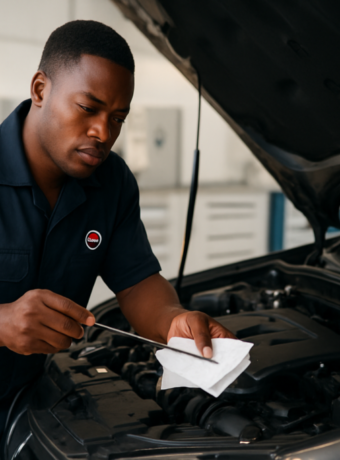
8. Oil Leaks
Oil spots under your car? The engine may be losing lubrication.
Fix: diagnose leaks early to avoid engine failure.
9. Check Engine Light On
This light warns you something is wrong—ignition, emissions, sensors, or fuel system.
Fix: scan the vehicle using OBD-II to find the issue.
10. Steering Wheel Vibrations
Your car should drive smoothly. Vibrations mean:
- unbalanced wheels
- bent rims
- damaged suspension
Fix: get wheels balanced and inspected.
11. Suspension Wear
A worn suspension causes a bumpy ride and poor handling.
Fix: replace shocks and bushings when needed.
12. Exhaust System Problems
Rust, holes, or catalytic converter issues reduce performance.
Fix: inspect exhaust piping and replace faulty parts.
13. AC Not Cooling
In hot climates, AC failure makes driving uncomfortable.
Fix: recharge refrigerant or repair compressor leaks.
14. Faulty Spark Plugs
Bad plugs cause poor performance and high fuel consumption.
Fix: replace plugs every 40,000–60,000 km.
15. Fuel Pump Issues
Engine stalling or difficulty starting? Fuel pressure may be low.
Fix: test the pump and replace when needed.
16. Broken Headlights or Taillights
Burned-out bulbs reduce visibility and cause police stops.
Fix: replace bulbs and clean foggy lenses.
17. Power Window Failure
Usually caused by faulty switches or motor failure.
Fix: replace the window motor or switch.
18. Strange Noises
Knocking, grinding, or squealing noises are warning signs.
Fix: identify noise source early to prevent costly repairs.
19. Leaky Radiator
A leaking radiator makes your engine overheat quickly.
Fix: patch small leaks or replace radiator completely.
20. Dirty Air Filters
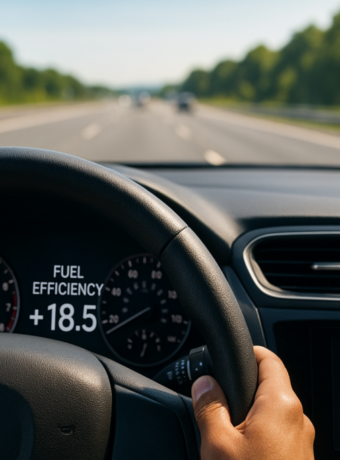
Clogged filters reduce engine power and fuel efficiency.
Fix: replace every 10,000–15,000 km.
Final Advice
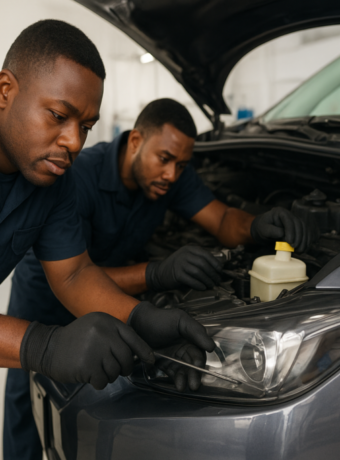
Car problems rarely disappear on their own. The best protection is early detection, regular servicing, and listening to your vehicle when it signals trouble.
Stay proactive, stay safe, and keep your car running smoothly.